


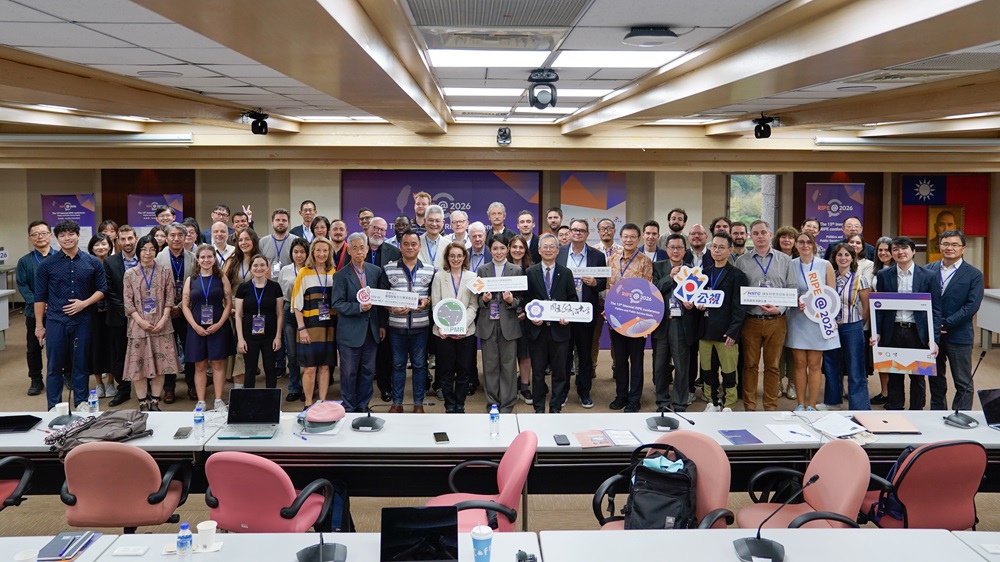
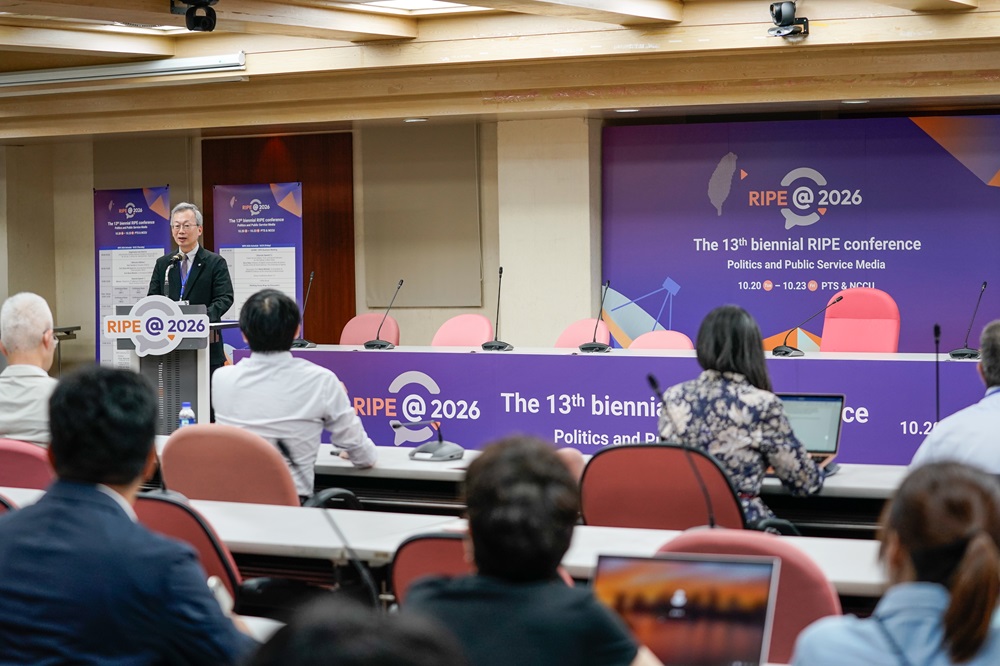
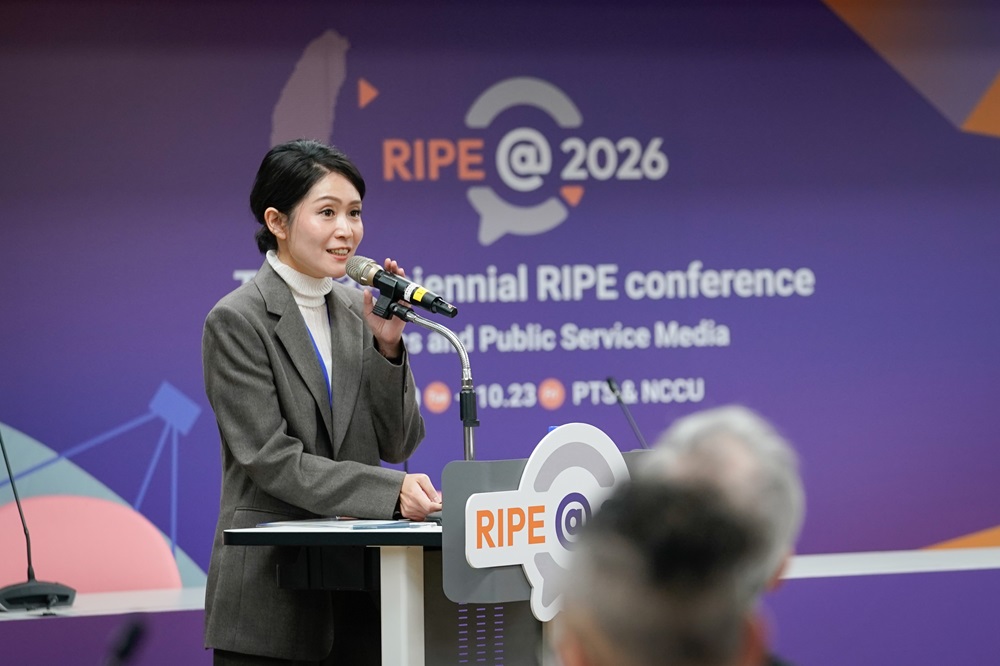
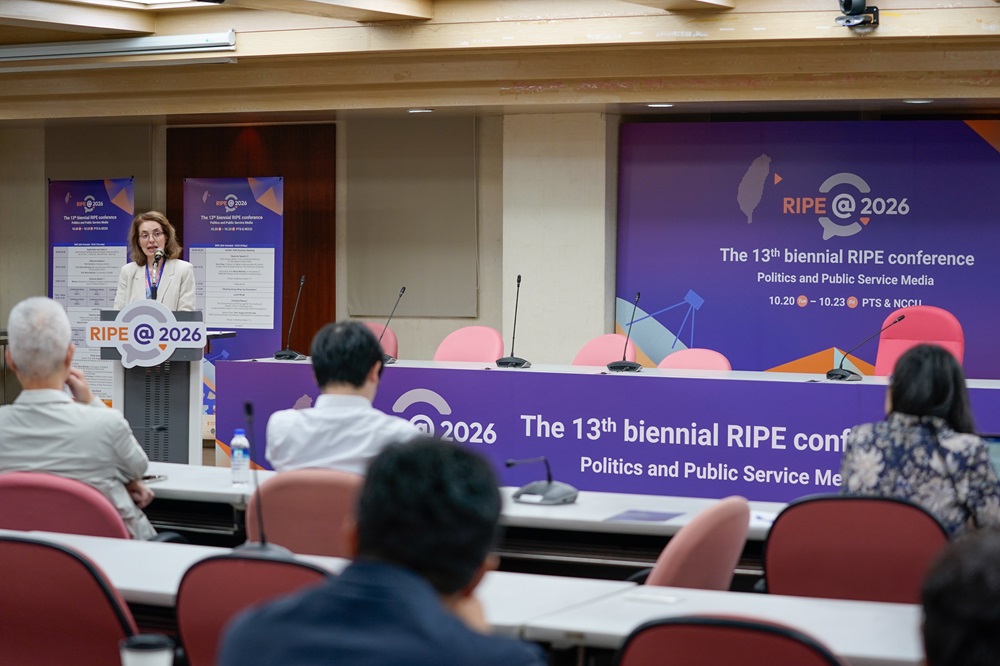

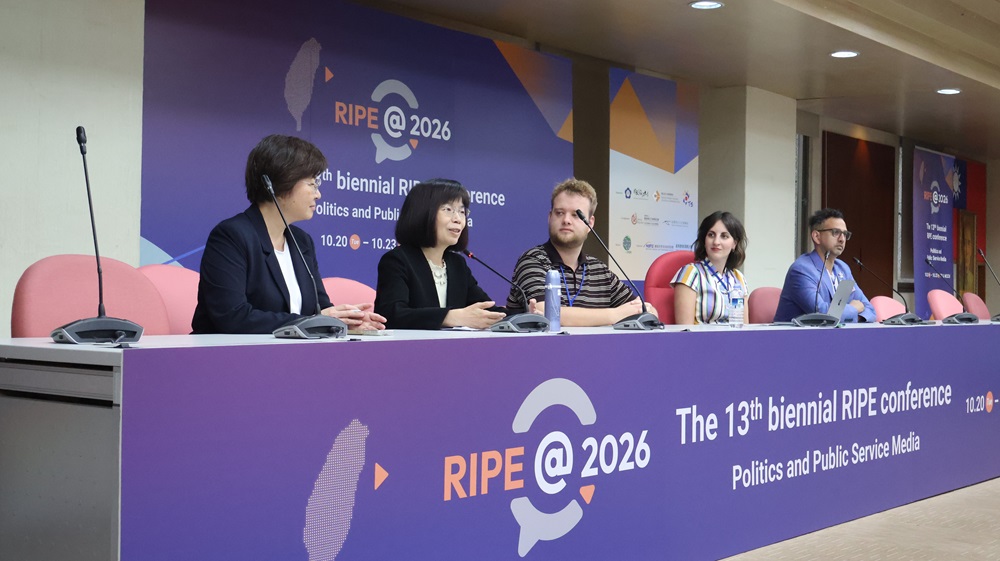
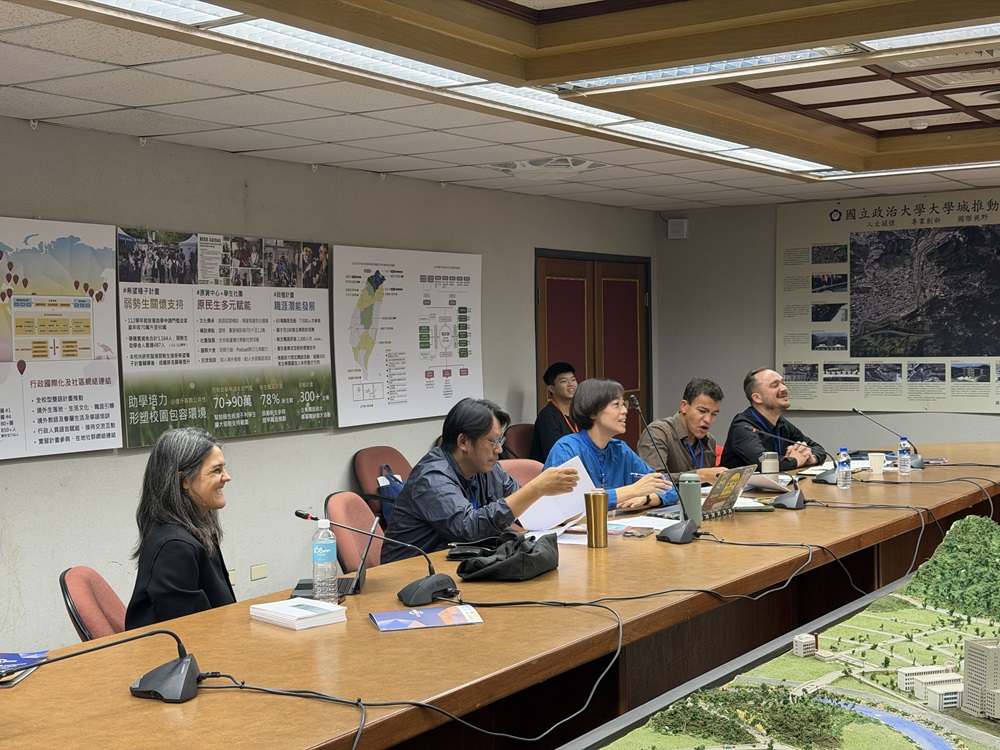

National Chengchi University (NCCU) and Taiwan Public Television Service Foundation (PTS) jointly organized the RIPE 2026 Biennial Conference, with NCCU hosting the academic sessions on October 22 and 23. Under the theme "Politics and Public Service Media," this year's conference explored key issues facing public service media (PSM), including media independence, shifting geopolitical dynamics, media policy and regulation, disinformation, platform power, and public trust in the digital age. The program featured keynote speeches and discussions across six working groups, bringing together scholars to share research findings, exchange perspectives, generate new insights, and foster academic collaboration.
The academic sessions opened at NCCU on the morning of October 22 with welcoming remarks from NCCU President Tsai-Yen Li; Elaine Jhih-Syuan Lin, Associate Dean of the College of Communication; and Maria Michalis, Co-President of the International Association of Public Media Researchers (IAPMR). President Li highlighted the College's origins in the Department of Journalism, established in 1935, and its contributions to professional journalism and democratic development in Taiwan over the past 90 years. He noted that this legacy made NCCU a particularly meaningful venue for the conference. Associate Dean Lin noted that NCCU's College of Communication has long emphasized the connection between academic research and media practice. She explained that the previous day's practice-oriented sessions had given participants insights into the challenges public service media face in their day-to-day operations, while the subsequent academic discussions would provide opportunities to explore these issues further through international exchanges and comparisons across different institutional contexts. Michalis highlighted the significance of hosting RIPE in Taiwan, noting that perspectives and experiences from the Asia-Pacific region could challenge established assumptions and encourage scholars to rethink the role and purpose of public service media in contemporary society.
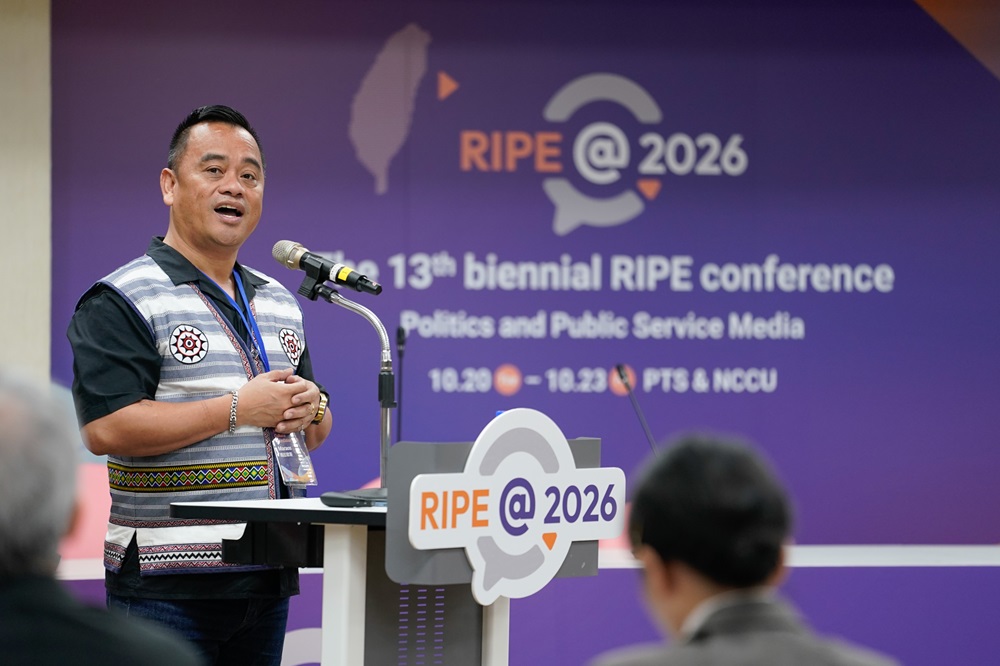
Following the opening remarks, Maraos, Chairperson of the Indigenous Peoples Cultural Foundation (IPCF), delivered the first keynote address. Drawing on his experience participating in the Tao people's movement against nuclear waste storage on Orchid Island, he reflected on the longstanding struggle of Indigenous communities to have their voices heard and their stories told from their own perspectives rather than through the narratives of outsiders. He emphasized that media autonomy is not merely about how issues are portrayed, but also about Indigenous peoples' right to represent their own histories and cultures. Recounting the establishment of Taiwan Indigenous Television (TITV), Maraos highlighted the vital role of Indigenous media in preserving cultural heritage, sustaining Indigenous languages, and enabling communities to speak for themselves on matters of public concern.
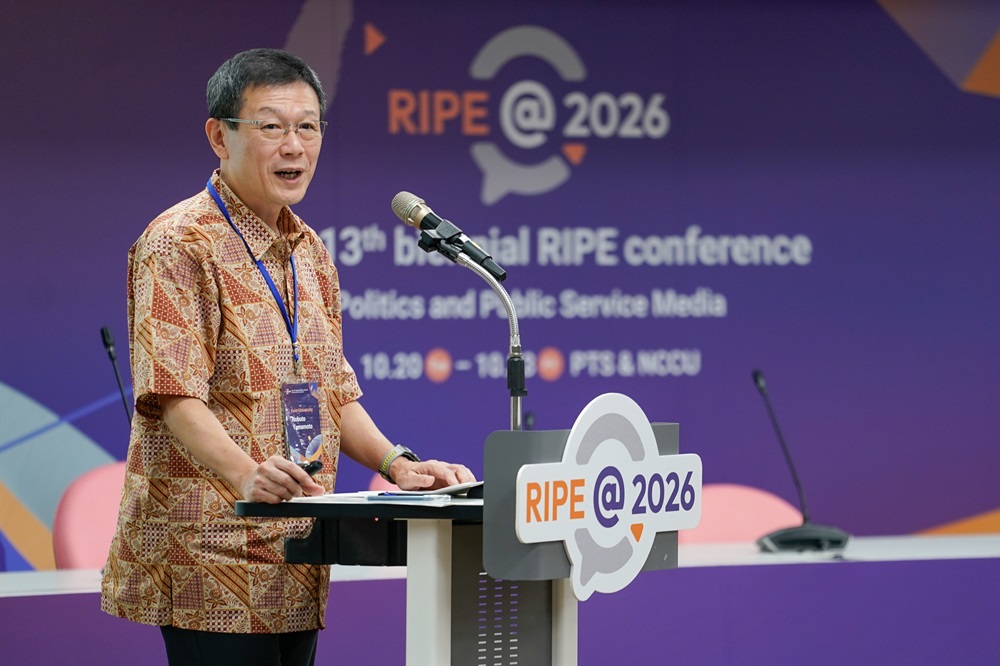
The second keynote address was delivered by Nobuto Yamamoto, Professor at Keio University in Japan, who compared social media development and political participation in Japan, Indonesia, and Singapore to examine how digital media shape civic engagement and public discourse across different political and social contexts. Yamamoto emphasized that democracy extends beyond elections, relying on citizens' ongoing participation in public dialogue, the formation of public opinion, and the scrutiny of those in power. Drawing on his comparative analysis of the three Asian countries, he highlighted the varying roles of social media in political participation and argued that public service media should foster meaningful dialogue and mutual understanding among different social groups, thereby sustaining public trust in an increasingly fragmented digital environment.
Due to Typhoon Champi, the conference moved online on October 23. The third keynote address was delivered by Terry Flew, Professor of Digital Communication and Culture at the University of Sydney's Faculty of Arts and Social Sciences. Flew examined declining trust in news worldwide and the challenges posed to public service media by the evolving digital landscape. He noted that political polarization, changing audience habits, and the rise of artificial intelligence have intensified pressures on public service media, particularly in maintaining credibility, securing funding, and adapting to changing patterns of information distribution. Nevertheless, he emphasized that their role in providing reliable information and sustaining public trust remains indispensable. Serving as discussant, Michalis further argued that public service media should not simply seek to gain public trust, but should also reflect on whether they are genuinely worthy of that trust. Drawing on Taiwan Broadcasting System and its multilingual channels, she highlighted how universality, independence, and mutual understanding among different communities can help public media strengthen social cohesion.
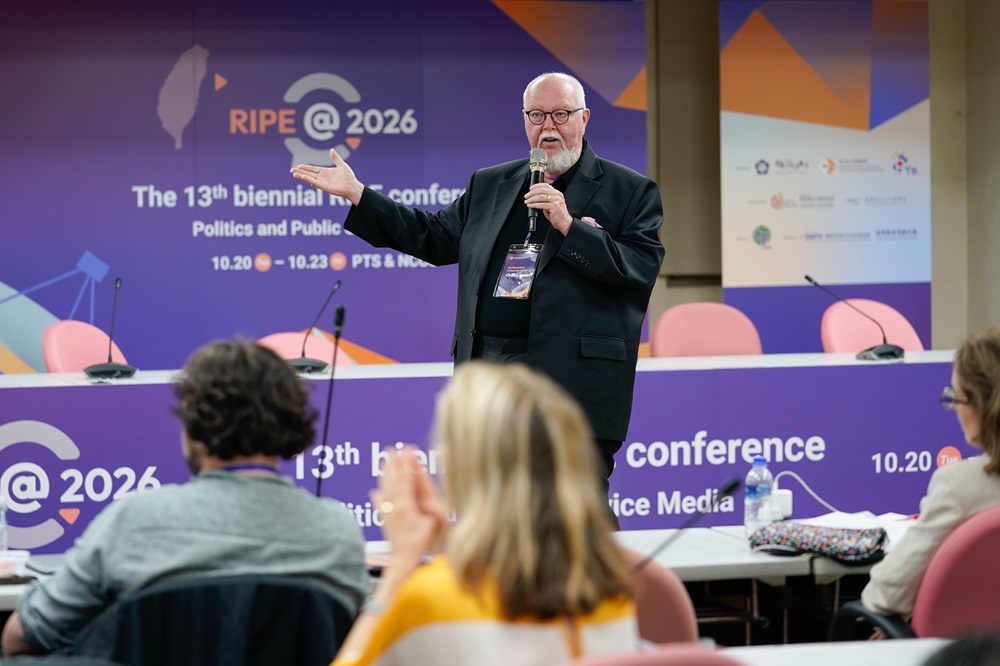
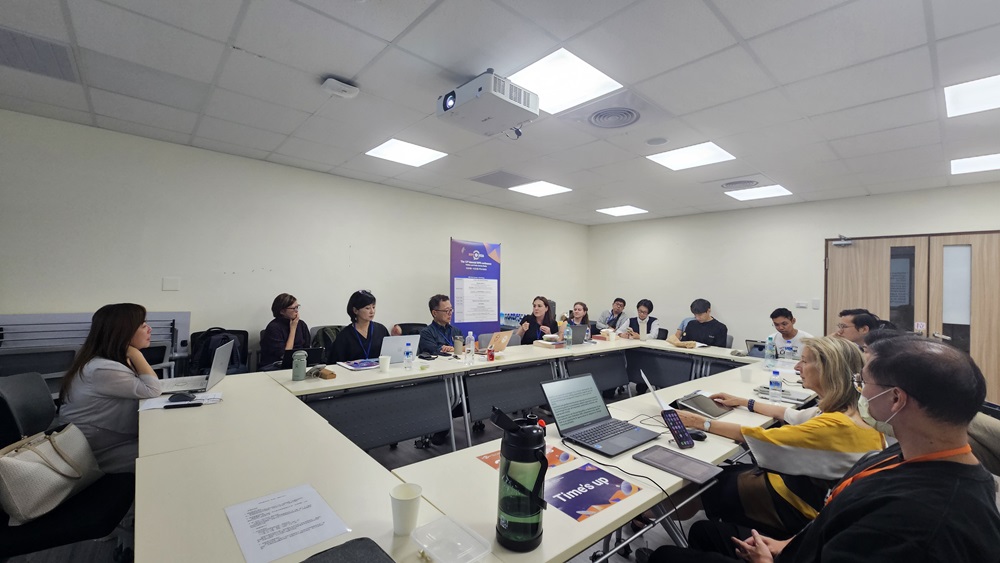
Following the keynote, participants reconvened in their respective working groups to consolidate the previous day's discussions and findings. Each group then presented its key findings at the closing plenary, moderated by Gregory Ferrell Lowe, RIPE Continuity Director. Lowe highlighted three major takeaways from the conference: the need to revisit concepts such as autonomy, universalism, and pluralism; expand methodological approaches to public service media research; and deepen scholarly discussions of media trust. He also emphasized that RIPE serves not only as a platform for academic exchange, but also as an opportunity to build international friendships and foster intercultural understanding. He expressed his gratitude to the organizing team and all participants for their contributions. The conference concluded with remarks from Professor Tsung-Jen Shih of NCCU's College of Communication, who thanked the RIPE community for choosing Taiwan and NCCU to host this year's conference and warmly invited participants to visit Taiwan again in the future.
