


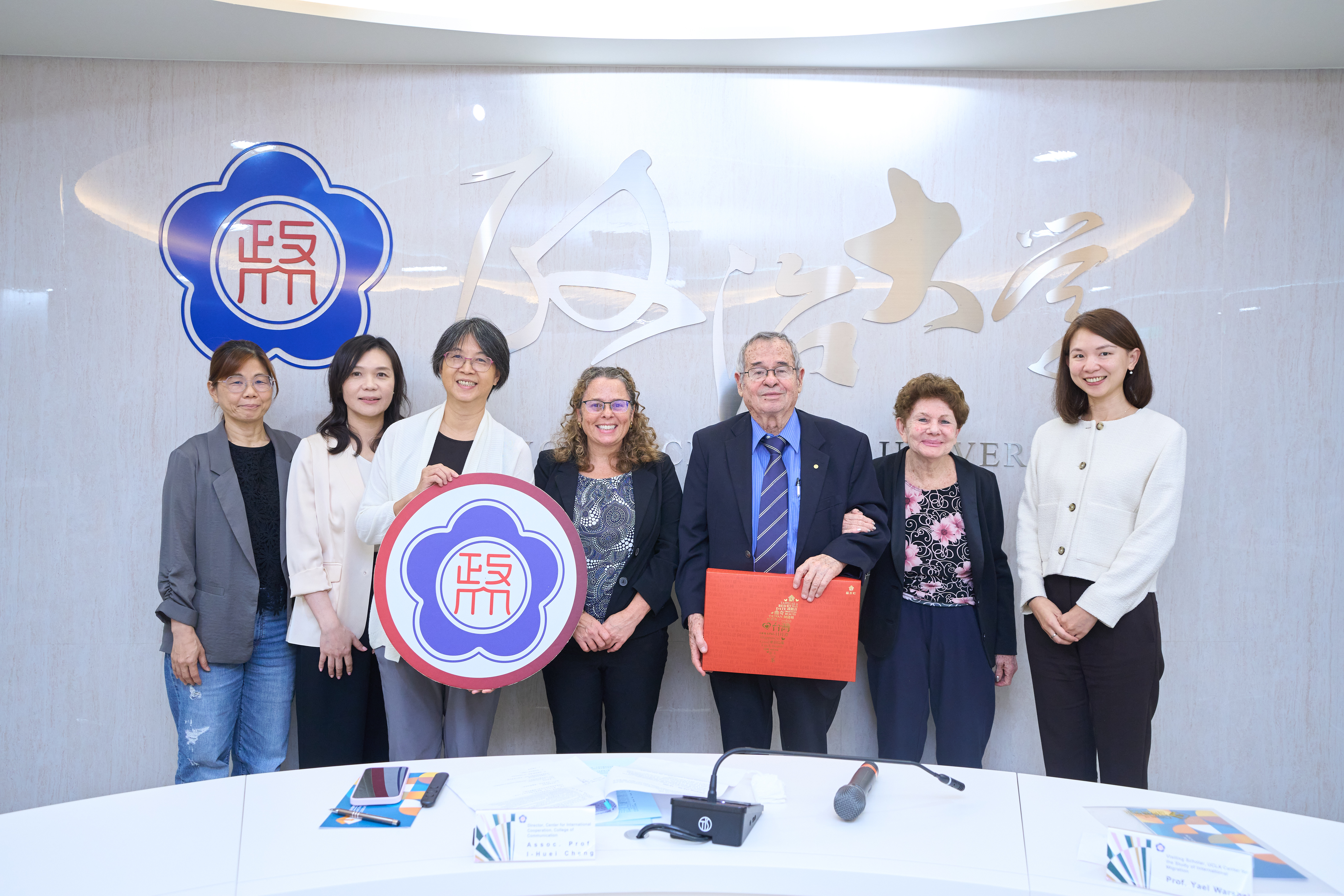

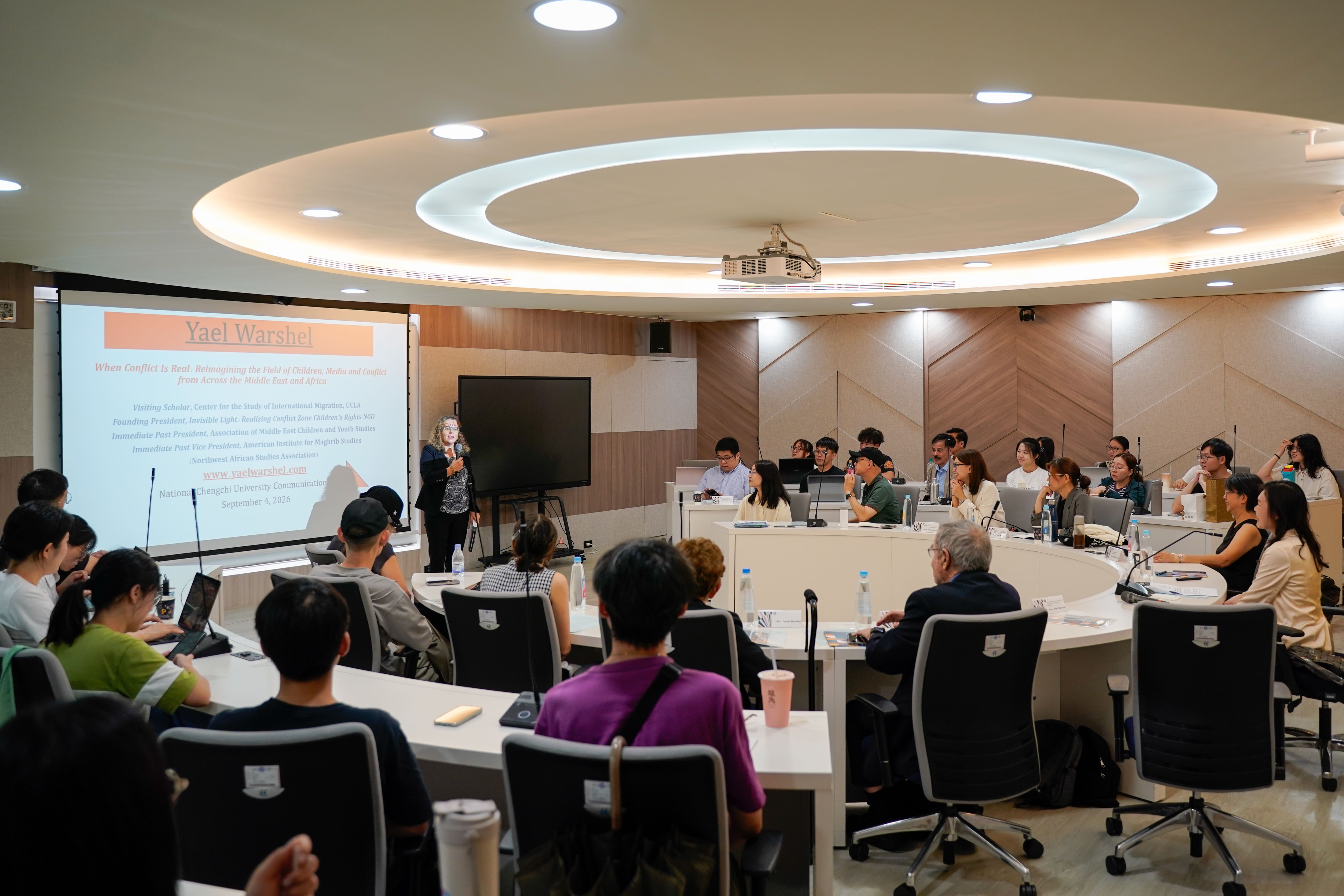



On September 4, 2026, the College of Communication at National Chengchi University (NCCU) welcomed Dr. Yael Warshel for a special lecture titled “When Conflict Is ‘Real’: Reimagining the Field of Children, Media and Conflict from Across Africa, the Middle East and Asia.” Working at the intersection of international media, childhood, and conflict analysis, practice, and policy, Dr. Warshel pioneered the concept of “peace communication,” which examines how communication can help build, make, and sustain peace.
Professor I-Huei Cheng, Director of the International Master’s Program in International Communication Studies (IMICS), opened the event and introduced the distinguished guests. Professor Hsiu-Hui Sun, Dean of the College of Communication, then delivered welcoming remarks, highlighting the importance of understanding children not simply as victims of conflict, but as social actors with voices, agency, and the potential to contribute to peace.
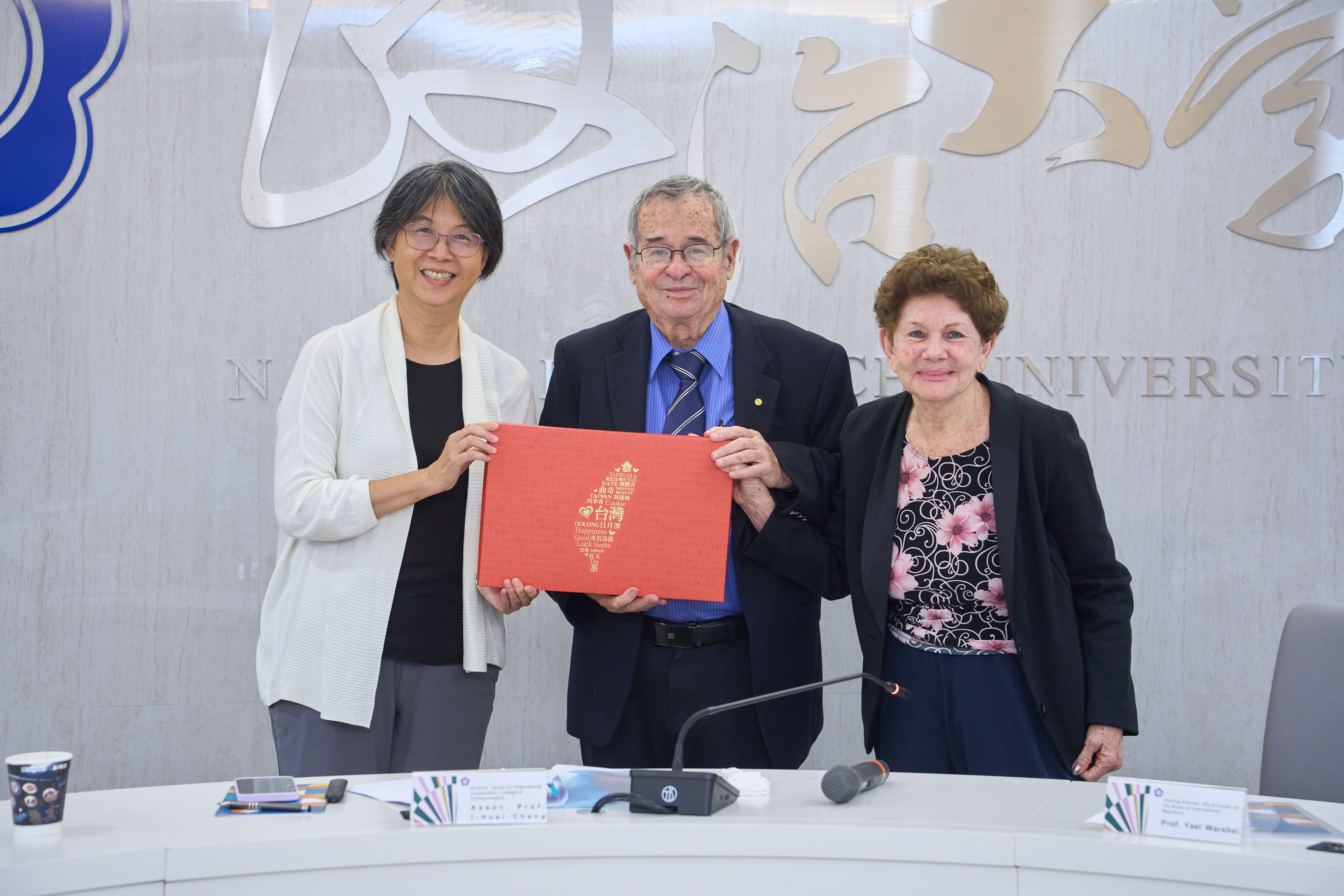
The College was also honored by the presence of Dr. Warshel’s parents, Professor Arieh Warshel, recipient of the 2013 Nobel Prize in Chemistry, and Mrs. Warshel. Professor Warshel briefly introduced his daughter’s academic journey, international fieldwork, publications, teaching, and efforts to translate research into practice. Speaking as both a scholar and a proud father, he emphasized the importance of her ideas.
In her lecture, Dr. Warshel challenged a central tendency in the field of children, media, and conflict. Much existing research, she argued, examines how children living in peaceful societies respond to media coverage of conflicts elsewhere. This emphasis on “mediated conflict” leaves largely invisible the children and young people who actually live through war, displacement, statelessness, and political violence—even though they make up a major share of populations in conflict zones.
Dr. Warshel called for conflict to be treated as a central analytical variable rather than merely the background to communication. Her transdisciplinary approach combines comparative peace-science data with ethnographic research on the everyday realities of conflict. These realities include not only visible violence, but also disrupted education, displacement, exclusion, and unequal access to communication infrastructure.
She outlined three ways of understanding communication: as content, as intervention, and as artifact. Communication campaigns must be rigorously evaluated because well-intentioned peace initiatives may be ineffective or produce unintended consequences. Drawing on her research into an Israeli-Palestinian version of Sesame Street, Dr. Warshel showed how children’s lived experiences can shape their interpretations in ways that program creators did not anticipate.
Media can also serve practical and protective purposes. Dr. Warshel described how mothers in high-conflict Palestinian communities used television to keep children indoors and away from military incursions or recruitment by militant groups. Young people’s blogs, music, and other media expressions can likewise reveal the views of populations often excluded from conventional measures of public opinion.
During the Q&A session, Professor Ssu-Han Yu asked Dr. Warshel to provide an example of how children could be empowered as peacebuilders. Dr. Warshel pointed to Arab Palestinian citizens of Israel, whose Palestinian identity and Israeli citizenship allow them to understand both perspectives. She argued that early childhood education, television, video games, and other forms of nonformal education could help these children develop as peacebuilders while encouraging other communities to support their role in the peace process.
Overall, Dr. Warshel’s research demonstrates that, through peace communication, early education, inclusive policy, and locally grounded interventions, children and young people can be empowered not merely to endure conflict, but to participate in managing it and building lasting peace. Her NGO, Invisible Light: Realizing Conflict Zone Children’s Rights, brings this vision into practice by supporting often-overlooked communities.
