


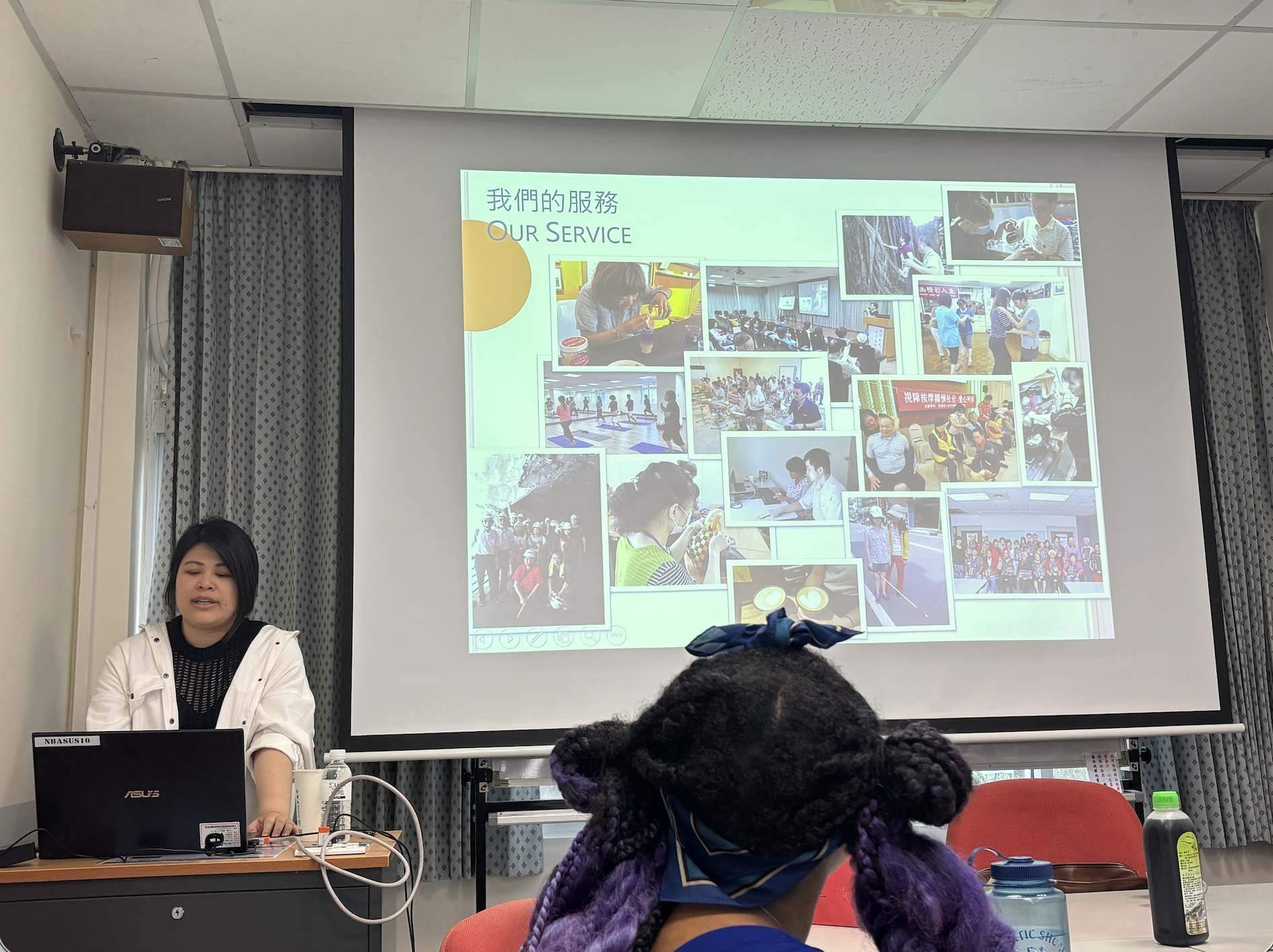
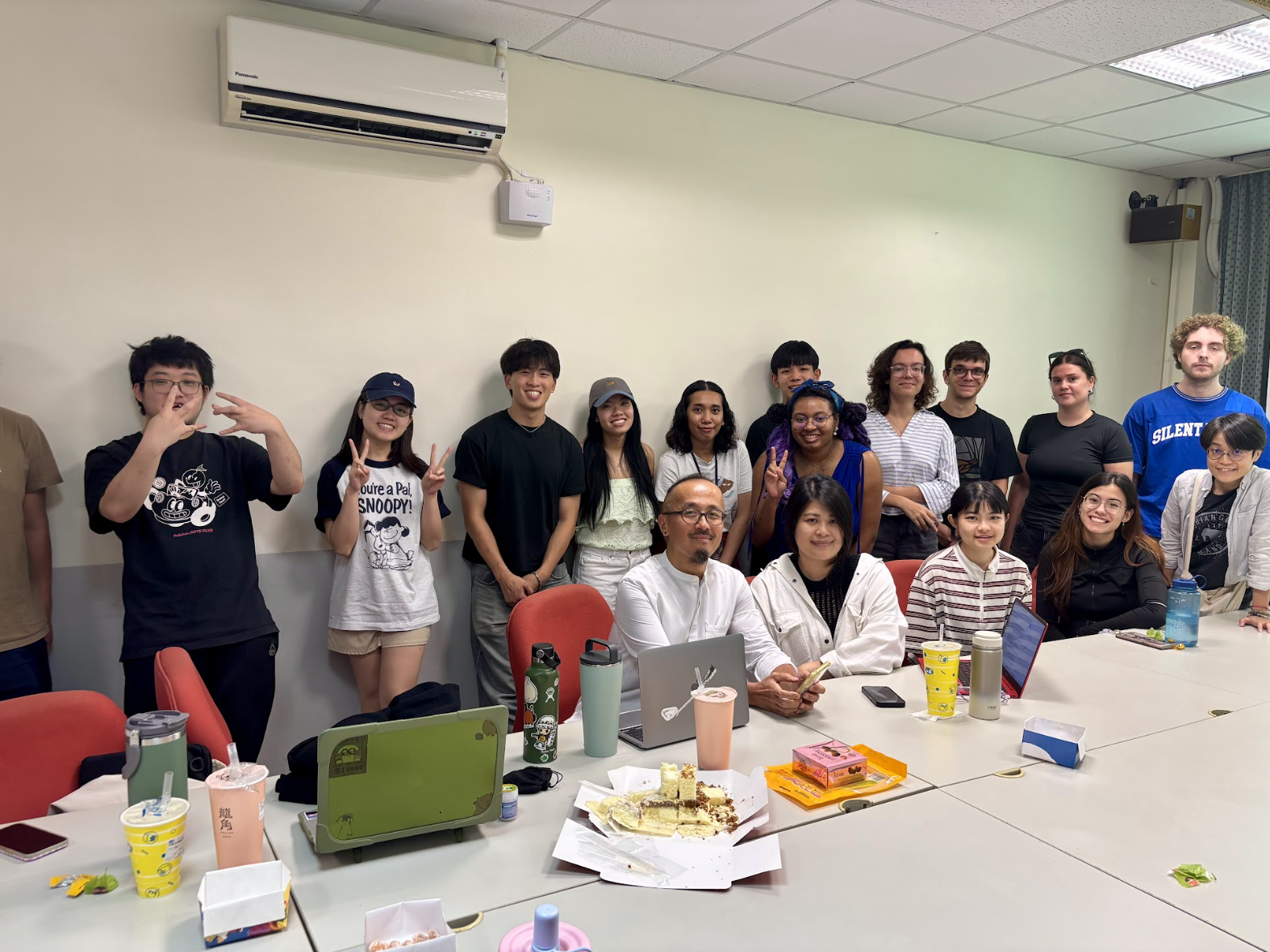

The International Master’s Program in International Communication course “Portrayals of Minorities in Media” held a guest lecture on May 7, inviting Chi-Ru (Shing) Wu, Director General of the Hsinchu City Growth Association for People with Visual Impairments, to speak on “Stereotypes and Living Obstacles of People with Visual Impairments.” Through film texts, everyday experiences, and interactive activities, Wu guided students to rethink how people with visual impairments are represented in media and social imaginaries, as well as the often overlooked barriers they face in daily life.
During the lecture, Wu first invited students to reflect on common assumptions about people with visual impairments. She noted that society often presumes them as completely blind, especially sensitive in hearing, familiar with Braille, or naturally associated with certain occupations such as masseurs. However, visual impairment is not a single experience. It includes different types, such as total blindness and low vision, and each person has distinct visual experiences, mobility needs, and ways of living.
Wu also cited several films to analyze how media shapes public understanding of people with visual impairments. ‘Scent of a Woman’ presents the impression that visually impaired people lack a sense of direction, while ‘Blind Masseur’ shows that they also have aesthetic experiences. ‘L’accordeur’ reminds the audience that not all visually impaired people are completely blind, and that people should not assume they can act freely in front of someone simply because that person has limited vision.
Drawing on lived experiences, Wu discussed the everyday difficulties that people with visual impairments may encounter, including being mistaken as impolite, elevators without Braille or audio guidance, insufficient sidewalks, inconvenient public transportation, unfriendly treatment of guide dogs in public spaces, and limited access to information. She pointed out that these barriers are not caused only by individual physical conditions, but are also linked to environmental design, public systems, and a lack of social understanding.
The lecture also addressed appropriate language use. Wu reminded students to avoid derogatory or reductive labels such as “the blind” when used carelessly or as a blanket term. Although “blind people” may be acceptable in some contexts, it can overlook the fact that not all people with visual impairments are completely blind. By contrast, “people with visual impairments” and “people with disabilities” are more respectful and accurate terms.
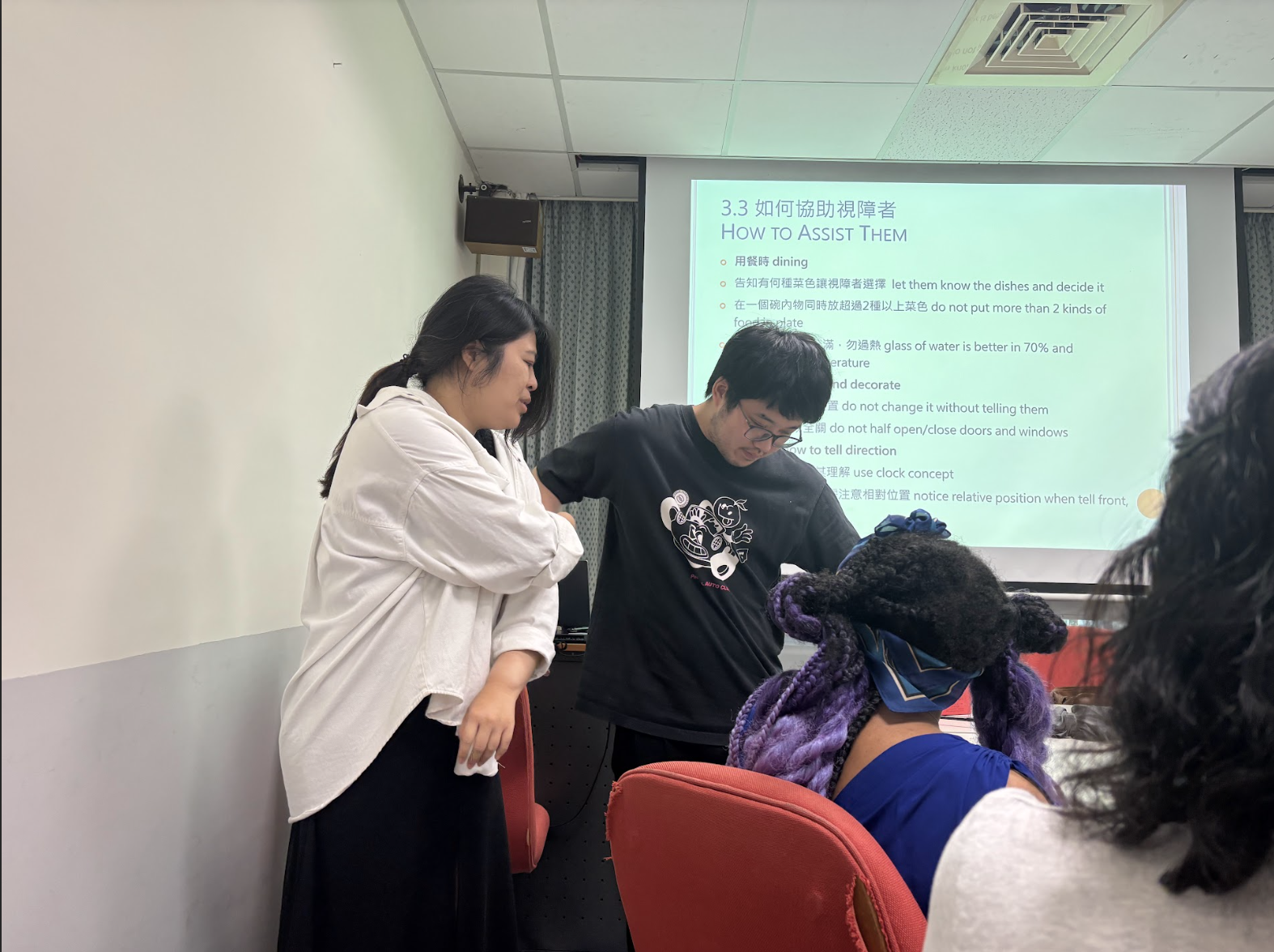
At the end of the class, Wu led hands-on activities, demonstrating how to use a white cane and how to guide a person with visual impairment. Students also practiced guiding one another. She explained that people should first ask whether assistance is needed, rather than directly pulling or leading someone. During meals, one can describe the dishes and the position of tableware, pour water to about 70 percent full, and avoid serving drinks that are too hot. When giving directions, using clock positions can also help with orientation.
In addition, Wu introduced common causes of visual impairments and shared principles for eye care. She reminded students to avoid using computers for long periods in dim environments and to wear sunglasses outdoors to reduce damage from strong light and ultraviolet rays.
Through media examples, personal sharing, and interactive practice, the lecture helped students understand that true friendliness is not merely an expression of sympathy. It begins with language, space, and everyday interaction, and with learning to recognize the needs and dignity of people with different bodily experiences.
