


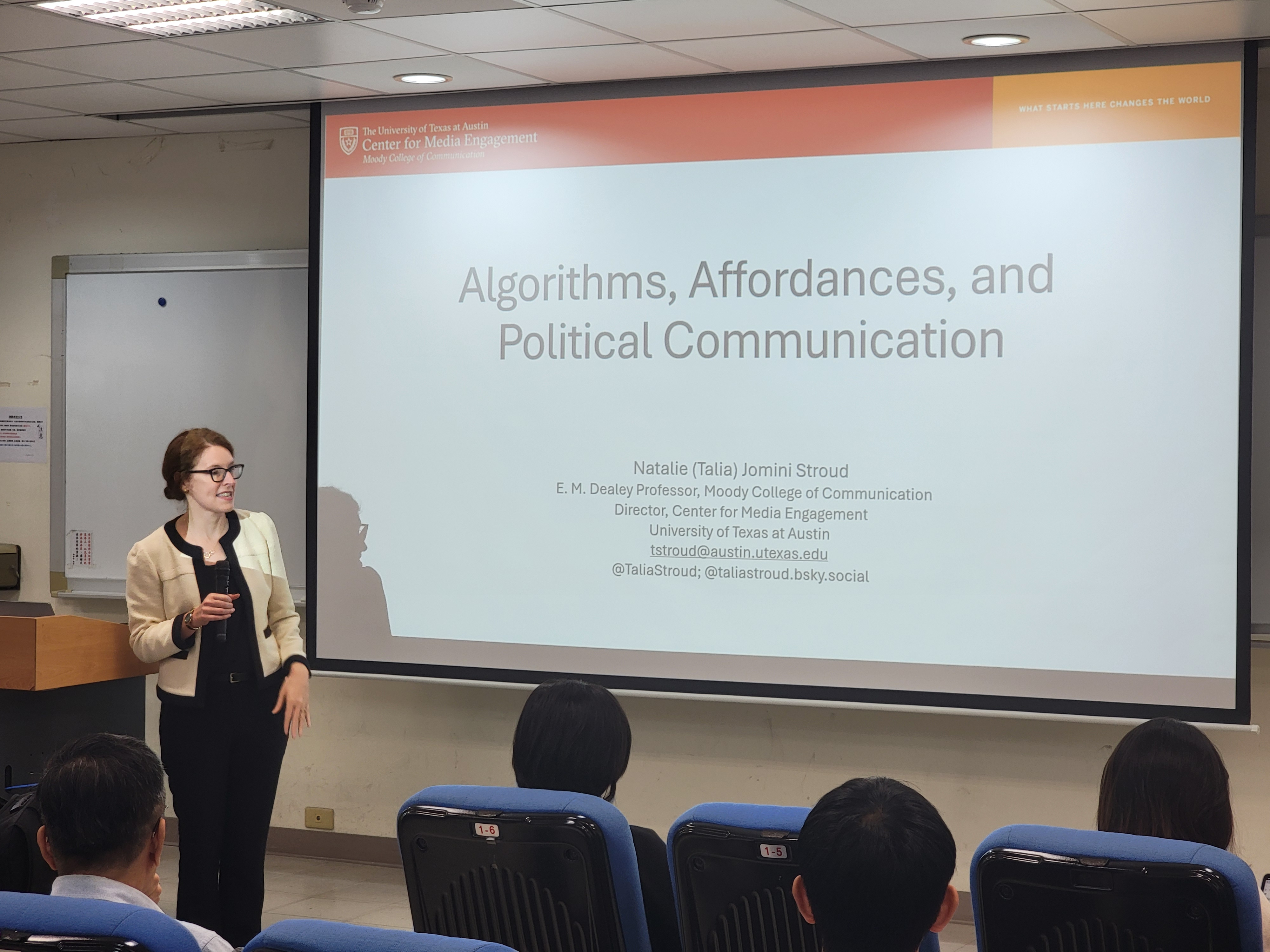
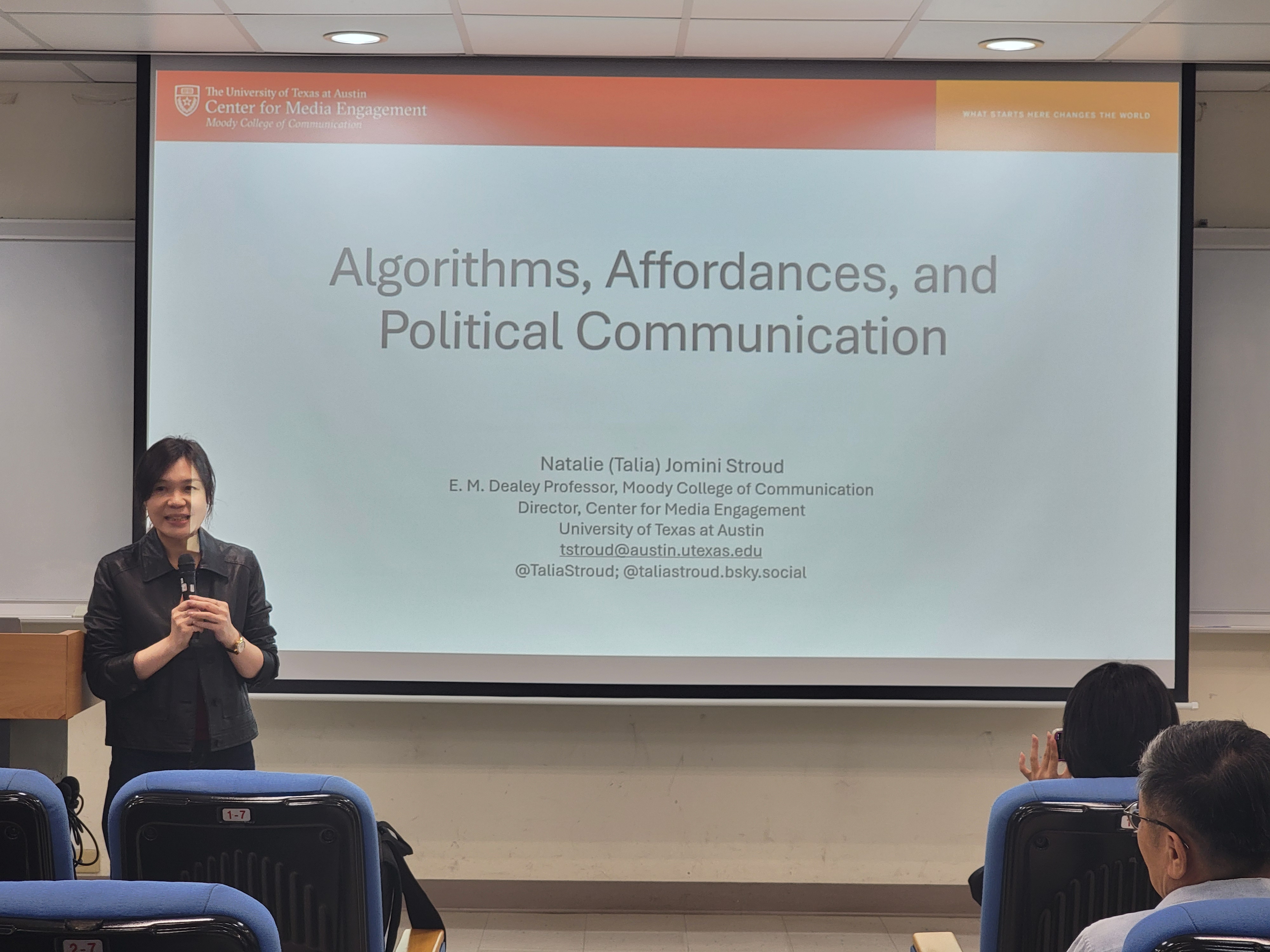
The College of Communication at National Chengchi University (NCCU) hosted a special speech titled “Algorithms, Affordances, and Political Communication” on April 30. Supported by the University Academic Alliance in Taiwan (UAAT), the speech featured Dr. Natalie Stroud from Moody College of Communication at The University of Texas at Austin.
Dr. Stroud, a Fellow of the International Communication Association (ICA), is a leading scholar in media effects, political communication, selective exposure, and civic engagement in digital media environments. In the speech, she examined how social media platforms and algorithms shape contemporary political communication and democratic participation.
Drawing on a large-scale academic collaboration with Meta during the 2020 U.S. election, Dr. Stroud introduced how researchers combined observational platform data and experimental interventions to study political participation, misinformation, news knowledge, and polarization. She also explained that the research team established safeguards to ensure academic independence.
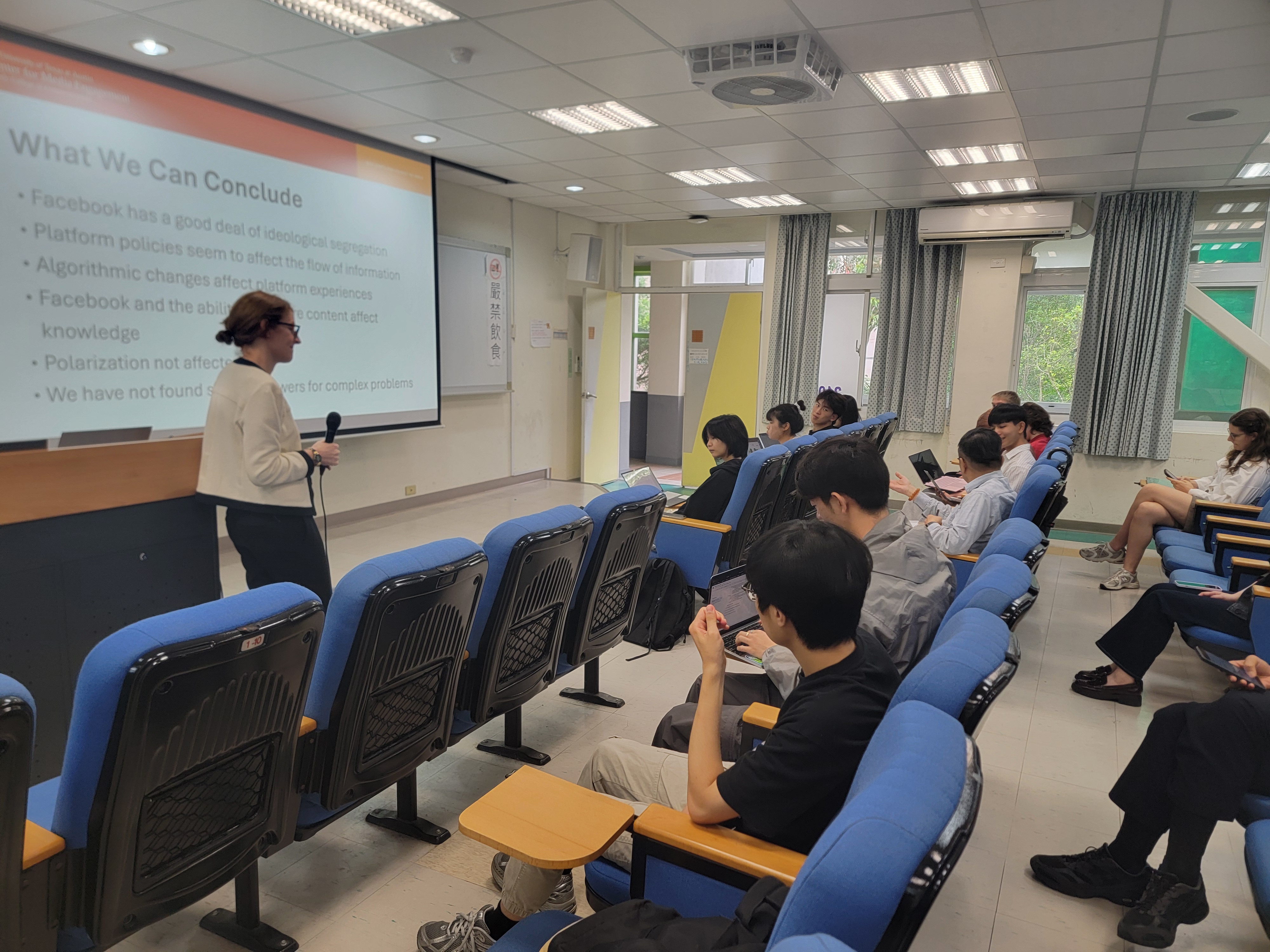
The speech highlighted the complex role of social media in democratic life. Dr. Stroud noted that while platforms can serve as important sources of news knowledge, they may also make it more difficult for users to distinguish facts from falsehoods. She also discussed evidence of ideological segregation and explained that interventions such as chronological feeds, removing reshared content, and reducing exposure to like-minded political content changed what users saw online, but did not necessarily produce measurable changes in political polarization.
Dr. I-Huei Cheng, Director of the IMICS program, noted that the lecture reflected the College of Communication’s continued commitment to connecting students with internationally recognized scholars and timely issues in communication research. She indicated that Dr. Stroud’s speech helped students better understand how algorithms influence political information environments, while also demonstrating the importance of rigorous empirical research in evaluating the democratic consequences of digital platforms. Through the UAAT framework, the College will continue to promote international academic exchange and support students in developing broader perspectives on media, technology, and society.
